An Analytical Reflection on the Work of Prof. Tapio Varis
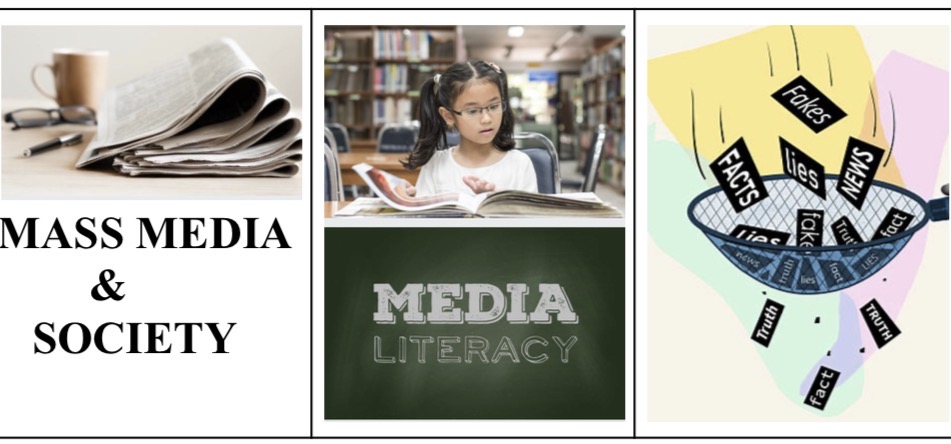
In a recent and thought‑provoking synthesis, Prof. Tapio Varis—Chairman of the board of the Center for Media and Peace Initiatives (CMPI), New York—brings together seven scholarly articles to illuminate the evolving nexus between media literacy, peace education, and cultural identity in the 21st century. Drawing on decades of international research and collaboration, Varis advances a compelling argument: media literacy has transcended its traditional role as a technical competence to become a cornerstone of critical thinking, intercultural dialogue, and global citizenship.
At the heart of this work is the recognition that humanity is undergoing a profound transformation in communication, education, and global order. Technological innovation, geopolitical tensions, and shifting cultural identities are reshaping how individuals engage with information and with one another. In this context, media literacy emerges not simply as a skill set, but as a critical tool for navigating complexity, resisting manipulation, and fostering a culture of peace.
Peace Education in an Age of Information Warfare
Varis reframes peace education as a dynamic and historically contingent practice—one that must evolve alongside changing global realities. In an era defined by militarization, ideological polarization, and information warfare, media narratives increasingly normalize violence. Concepts such as cyber warfare and hybrid influence shape public consciousness, often appealing to emotion rather than reason.
Against this backdrop, Varis emphasizes that while humans may not be inherently peaceful, they are capable of peace. The role of education, therefore, is to cultivate this capacity through ethical reflection, dialogue, and cultural understanding. Peace communication, unlike war propaganda, requires rational engagement and universal appeal.
Media, Power, and the Multipolar Information Order
A key contribution of Varis’s analysis lies in its examination of global media power structures. He observes the decline of neutral voices in journalism, illustrated by Finland’s transition from Cold War neutrality to contemporary geopolitical alignment. At the same time, he highlights the rise of non‑aligned perspectives in Asia and the emergence of a more multipolar media landscape.
This shift underscores the persistent dominance of Western narratives in shaping global perception, while calling for a more inclusive, multicultural, and multicivilizational approach to media literacy. Communication, in Varis’s framework, is not merely the transmission of information but an act of “sharing and belonging,” deeply tied to identity formation and cultural meaning.
Intercultural Dialogue and the Ethics of Media Literacy
Central to Varis’s vision is the idea that media literacy must be multidimensional—encompassing cognitive, emotional, and ethical capacities. It is not enough to decode media messages; individuals must also develop values such as tolerance, diversity, and critical awareness.
In a globalized world increasingly threatened by cultural homogenization, intercultural dialogue becomes essential for preserving diversity and fostering mutual understanding. Media, in this sense, can either reinforce division or promote empathy and cooperation. The challenge for education systems is to cultivate critical awareness of bias while nurturing respect for different cultural perspectives.
Varis’s concept of the “global university” further underscores the need for educational systems that transcend national boundaries while remaining grounded in local cultures—a balance that is particularly relevant for regions like Africa, where global integration often intersects with strong cultural identities.
Media Literacy in Times of Global Crisis
The COVID‑19 pandemic serves as a powerful case study in Varis’s analysis. While the crisis accelerated digital learning on an unprecedented scale, it also exposed deep inequalities in access to technology and education. Varis cautions against techno‑determinism: the mere presence of digital tools does not guarantee effective or equitable learning. Instead, he advocates for the integration of media literacy with open educational resources and inclusive policies to support global cooperation and educational equity.
Toward a New Humanism
Ultimately, Varis’s work is anchored in a broader philosophical framework of “new humanism,” which emphasizes dignity, cooperation, and interdisciplinary learning. Media literacy, in this vision, becomes a vehicle for cultivating ethical global citizens capable of navigating complexity while upholding shared human values.
Conclusion
Prof. Tapio Varis’s synthesis offers a compelling and timely reminder that media literacy is no longer optional—it is foundational to the survival of democratic societies and the pursuit of global peace. As misinformation, cultural fragmentation, and geopolitical tensions intensify, the need for a holistic approach—integrating ethics, culture, and critical thinking—has never been greater.
For scholars, policymakers, and educators—particularly those engaged in media development and civic education across Africa and beyond—this work provides both a conceptual framework and a strategic imperative: to reimagine media literacy as a tool not only for understanding the world, but for transforming it.